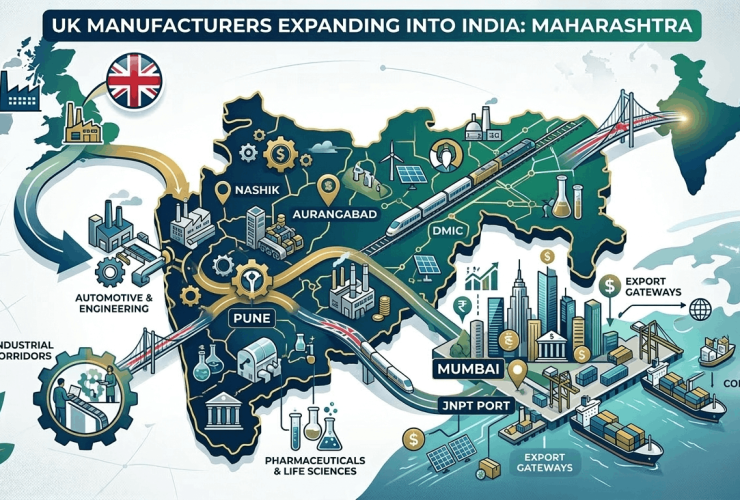



India is now more than simply an emerging market for UK SMEs looking to expand internationally; it’s a strategic opportunity. India provides a potent environment for innovation, investment, and market expansion thanks to its fast-growing middle class, flourishing startup culture, and solid bilateral trade links with the UK.
With more than 100 unicorn firms valued at more than $350 billion, India is currently home to over 112,000 recognized startups, making it the third-largest startup ecosystem in the world.
In the meantime, the two nations’ economic relations are getting stronger. In 2024, commerce between the UK and India amounted to almost £42 billion, indicating an increasing level of cooperation in the fields of technology, finance, manufacturing, and innovation.
For UK SMEs, this creates a powerful opportunity:
Raise investment, access new customers, and scale faster by entering the Indian market.
In this guide, we explore how UK SMEs can successfully raise investment in India and establish a strong market presence.
Why India Offers UK SMEs a Potential Investment Opportunity
Over the last decade, India’s investment environment has significantly changed. It is very appealing to foreign companies for several reasons:
A Massive and Growing Market
- More than 1.4 billion consumers
- Growing middle class quickly
- High levels of digital technology adoption
A Thriving Startup and Innovation Ecosystem
India has become one of the world’s most dynamic innovation hubs, with over 120,000 startups registered in the past decade.
Key high-growth sectors include:
- Fintech
- SaaS and enterprise software
- HealthTech
- Logistics technology
- Clean energy
- AI and Deep tech
Strong Government Support for Innovation
Programs like Startup India and Make in India offer incentives, funding support, and regulatory ease to attract innovation and foreign investment.
While UK subsidiaries may not always qualify directly, using the right local structure can unlock these benefits and partnerships for example, setting up an Indian entity to access grants or pilot programs with local partners. These programs make it easier for UK SMEs to get funding and form alliances.
Step 1: Understand India’s Investment Ecosystem
Before raising capital, UK SMEs should understand how fundraising typically works in India and how investors evaluate foreign startups.
India’s investment environment comprises venture capital funds, angel networks, corporate investors, and government-backed innovation programs. The country has emerged as the world’s third-largest startup ecosystem, thanks to robust local and foreign investment activity.
However, Indian investors often evaluate international companies differently from domestic startups. While global traction is valuable, investors usually prioritise signals that the business can succeed specifically in the Indian market.
Key Investor Types in India
- Angel Investors and Startup Networks
Often the first institutional investors for companies entering India, with strong interest in startups that can demonstrate early validation through pilots, partnerships, or local clients. - Venture Capital Firms
Focus on high-growth sectors such as fintech, SaaS, AI, and deeptech, typically backing startups that can scale quickly in India’s large and diverse market. - Corporate Strategic Investors
Large enterprises invest in startups to access new technologies and innovation, particularly when solutions can integrate with existing Indian industry ecosystems. - Private Equity Firms
Generally invest in later-stage companies with proven revenue models and clear expansion potential in India. - Government and Innovation Grants
Programs backed by the Foreign, Commonwealth & Development Office (FCDO) and initiatives like Energy Catalyst support UK–India collaboration in sectors such as clean energy, healthcare, and sustainability.
For example, Energy Catalyst has funded UK SMEs to pilot clean energy solutions in India through local partnerships.
With the right local structure, UK companies can access these programs and unlock funding while building in-market traction.
Foreign investment has played a critical role in the ecosystem accounting for roughly 36% of startup investment funding in India over the past decade.
Example – what3words London-based SME expanded into India by working with local partners and deploying its location technology with logistics and emergency services.
Lesson for SMEs: Start with a clear India-specific use case and demonstrate practical applications through early partnerships.
Step 2: Build a Localised Market Entry Strategy
Replicating their home market approach in India is one of the most frequent errors made by foreign businesses. Successful SMEs in the UK modify their strategy.
A strong India strategy should include:
- Market opportunity analysis
- Local competitor mapping
- Pricing strategy adapted to the Indian market
- Digital-first customer acquisition
- Regional distribution partnerships
India is a diverse market with multiple regional economies, so localisation is critical.
Example: Blippar expanded into India by tailoring its augmented reality platform for advertising campaigns with Indian brands and agencies.
Lesson for SMEs: Localising your product for specific industries or use cases in India makes it easier to attract investors and partners.
Step 3: Build Strategic Partnerships in India
Investment often follows credible local partnerships.
Investors prefer companies that demonstrate:
- Local market knowledge
- Operational readiness
- Established partnerships
Types of Partnerships That Accelerate Investment
- Local distributors
- Technology partners
- Manufacturing partners
- Joint venture partners
- Strategic enterprise clients
These partnerships reduce risk and make your company far more attractive to investors.
Example: Oxford Nanopore Technologies expanded its genomic sequencing technology into India through collaborations with research institutes and healthcare organisations.
Lesson for SMEs: Strategic partnerships can help validate your technology and build investor confidence early.
Step 4: Navigate Regulatory and Compliance Requirements
India has made significant improvements in ease of doing business, but regulatory readiness remains essential for foreign companies.
- UK SMEs should consider:
- Foreign Direct Investment (FDI) regulations
- Company incorporation options
- Taxation and GST requirements
- Intellectual property protection
- Employment and HR regulations
Ensuring compliance early builds investor trust and speeds up deal execution.
Example: TransferGo entered the Indian market by aligning its cross-border payment services with Indian banking regulations and financial partners.
Lesson for SMEs: Early regulatory alignment helps reduce risk and build trust with investors.
Step 5: Establish a Real Presence in the Indian Market
Investors are far more likely to fund companies that demonstrate long-term commitment to India.
Ways to establish presence include:
Setting Up Local Operations
- Establish an Indian subsidiary. Choose the structure of subsidiary carefully if you will be looking to participate in govt tenders or benefit from govt schemes in India
- Build a local sales or technology team
- Create an R&D or innovation hub
- Partner with Indian enterprises
India’s digital infrastructure has grown rapidly, with internet users rising from 251 million in 2014 to more than 950 million in 2024.
This creates enormous opportunities for technology-driven SMEs.
Example: Improbable explored opportunities in India through partnerships and collaborations in digital infrastructure and simulation technologies.
Lesson for SMEs: Even a small local presence or partnership network can signal long-term commitment to investors.
What Investors Expect from UK SMEs Entering India
Indian investors usually look for a few key indicators that show substantial market potential and long-term commitment when assessing overseas firms.
- Clear India Use Case: Rather than just copying a worldwide offering, investors want to understand how your solution addresses a particular need in the Indian market.
- Local Partnerships or Pilot Projects: Early partnerships or pilot initiatives with Indian clients or partners show genuine market traction.
- Scalable Pricing Model: Investors like business strategies that strike a mix between affordability and scalable growth because India is a high-volume market.
- Dedication to the Indian Market: Developing a local staff, forming alliances, or having an operational presence demonstrates that the expansion is strategic as opposed to exploratory.
Ready to Expand into India?
India offers one of the most exciting growth opportunities for UK SMEs today.
🚀 Technovedge can help you connect with investors, build partnerships, and successfully enter the Indian market.
🔗 Follow us on LinkedIn for ongoing UK–India technology insights